Episode Transcript
[00:00:00] Ryan Carpenter: The legacy is so much more important to me than the dollar. And so to me, the legacy and what we can leave behind with where we've come from and where we are today outweighs just trying to be profitable and chasing the dollar.
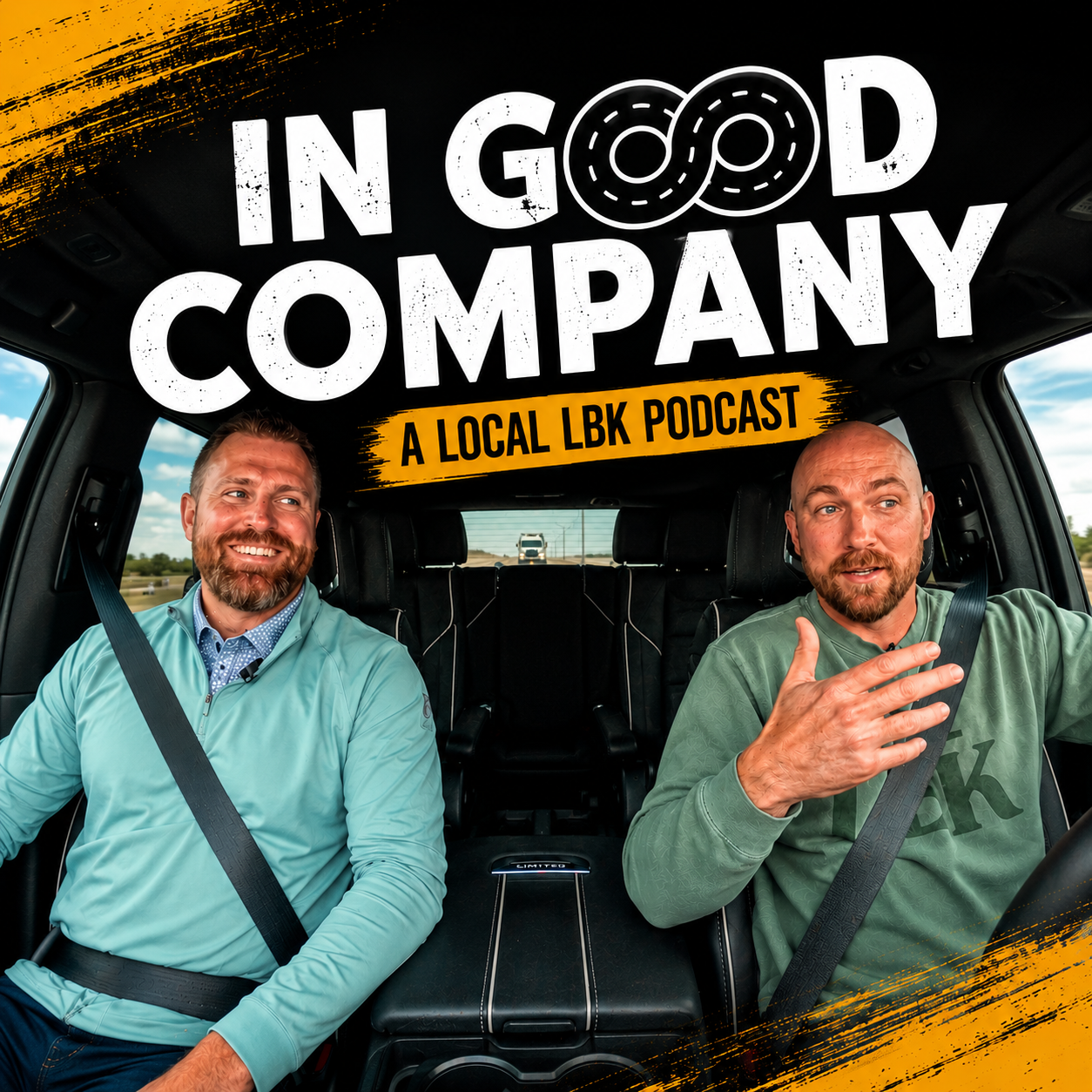
[00:00:13] Taylor McAlpine: Hey, y', all, it's Taylor McAlpine with local LBK. We're here at the Cadillac Cavendair dealership here in town and we are excited to welcome you to a new episode of In Good Company, our new podcast. Talking with multi generation business owners and talking about their legacy, how they invest in the community and how they prepare for the future. Today we're talking with Ryan Carpenter of Armstrong, and their business has been around in Lubbock for almost 100 years. So four generations and preparing potentially for a fifth. He's got a four year old, never know what's going to happen. So let's look at how Ryan is getting ready to take over the family business. Prepare for the future, and how planning, preparation can help your business be a lot more resilient. So tune in and remember, you're always in good company.
And welcome to the podcast, Ryan.
[00:01:05] Ryan Carpenter: Thank you very much. Thanks for having me.
[00:01:07] Taylor McAlpine: Glad you were able to make it. Yes, sir. So what do you think of the Escalade?
[00:01:10] Ryan Carpenter: That's sweet.
[00:01:11] Taylor McAlpine: So I'm a big fan. Excited to drive this around.
So what have you been up to today?
[00:01:17] Ryan Carpenter: Oh, we had a new hire come in, so we're getting him up to speed. New construction manager, estimator and went and picked up a truck this morning. So.
[00:01:26] Taylor McAlpine: Nice.
[00:01:26] Ryan Carpenter: Yeah, love it.
[00:01:27] Taylor McAlpine: So for those who don't know who is Ryan and what business are you with?
[00:01:30] Ryan Carpenter: Ryan Carpenter with Armstrong Pluminarian Electric here in Lubbock, Texas. We've been around since 1934. Fourth generation business.
[00:01:37] Taylor McAlpine: Love it. So 1934, how old are y'?
[00:01:40] Ryan Carpenter: All? We are 92 this year.
[00:01:41] Taylor McAlpine: Oh, my gosh. Y' all ready to turn 100?
[00:01:44] Ryan Carpenter: Oh, yeah.
[00:01:44] Taylor McAlpine: Oh, my gosh.
[00:01:47] Ryan Carpenter: We got big plans for 100.
[00:01:49] Taylor McAlpine: You already have plans in the works?
[00:01:50] Ryan Carpenter: Trying. I mean, it's not written down or on paper, but I've got it brainstorming and we've got eight years to work on. Been noodling trying to get the finances there to where I can start doing some of the additions and little improvements that I want to do.
[00:02:01] Taylor McAlpine: Oh, how cool. Okay, so how we usually start the podcast is how the business even gets started.
[00:02:07] Ryan Carpenter: So 1934, my granddad, or great granddad, excuse me, eh, Armstrong started the business. It was a appliance repair company. We also Worked on Filco radios.
Basically had appliances and refrigerators that he would sell to the customers. They would have a box on the outside of their house. They would put a dime, or, excuse me, a nickel in every time each morning to keep that refrigerator running. And he had technicians that would go around and collect those coins. And that was kind of his business model there at the beginning.
[00:02:35] Taylor McAlpine: Okay.
[00:02:36] Ryan Carpenter: Got into refrigeration, was really good friends and connections with Roy Furze, Furze Cafeteria and Furze, the restaurants that we've been to.
[00:02:47] Taylor McAlpine: Wow.
[00:02:48] Ryan Carpenter: So unfortunately, they're no longer around, but we all. We know them, so got in a refrigeration game doing that, did Piggly Wigglies and some Safeways all across the state of Texas, New Mexico and Oklahoma.
He had two daughters. And so basically once the daughters got married, they had the two son in laws were mechanically minded. And so they basically formed a mechanical group and it was called C and L Mechanical.
[00:03:16] Taylor McAlpine: Okay.
[00:03:17] Ryan Carpenter: So he had the refrigeration side. The son in laws had the plumbing and the mechanical side. And at his passing, in about 1980, the brother in laws merged the two businesses from Armstrong Mechanical, C L. Excuse me, Armstrong Supply, C L Mechanical. And they blended it to be Armstrong Mechanical.
[00:03:35] Taylor McAlpine: Okay.
[00:03:36] Ryan Carpenter: And so we were Armstrong mechanical from about 1980 to about 2016 when my father, Chris Carpenter, added electrical to our service offerings. And so at that time we rebranded. And so that's where we are today. Armstrong Plumbing, air and electric.
[00:03:49] Taylor McAlpine: Love it.
Feels like a mouthful sometimes, I bet, though.
[00:03:52] Ryan Carpenter: Yes. So but I've said it so many times, I feel like it's got it down. Comes out. Yeah.
[00:03:56] Taylor McAlpine: So why the electrical component? Did he have a background with it?
[00:04:00] Ryan Carpenter: No, but when we. We're a lot more competitive on our bids for commercial construction. When you can provide the plumbing, the electrical and the mechanical together.
[00:04:09] Taylor McAlpine: Okay.
[00:04:10] Ryan Carpenter: Now, we have not looked at putting that on the commercial side just yet. Data centers are kind of taking away the electricians and the plumbers in the state right now, as well as the H Vac technicians. And so it's a little more difficult. So we've kept it really service based on that side. But there are a lot of customers components that we need to connect with H Vac equipment.
And usually you have to be a certified licensed electrician. And so it's either you do that through a third party, which we still do from time to time when we get too busy, or you bring it in house. And so we found a person that was local and had the master's license and so brought that in. And that helped us really just do everything through Armstrong's name versus trying to bring in third parties here and there to do the pieces.
[00:04:51] Taylor McAlpine: And I imagine that makes your business a little more resilient when you have it all in house and so y' all can adapt to change and make sure you have your quality touch on everything.
[00:04:59] Ryan Carpenter: Yes, sir. Yep. And we do a lot of cross training, and so a lot of our plumbers, they've had to seal ductwork, they've had to help hang, they've had to help connect equipment, do startups. And so there's just a lot of cross training we do internally. Because sometimes you. You're super heavy plumbing, and there's no H Vac work going on. So sometimes the phasing of the jobs just don't work out the way you want them to. And so you've got to be resilient, like you said, and be able to swing people this way, in that way.
[00:05:23] Taylor McAlpine: I was about to say, if you all have made it this long, I think y' all figured something out.
[00:05:25] Ryan Carpenter: Yes, sir.
[00:05:26] Taylor McAlpine: So what are some of the family stories you've heard over the years? Because it's multiple generations, and so what were the obstacles that's going through world wars, that's going through market ups and downs. What have you seen the family business go through?
[00:05:39] Ryan Carpenter: So with eh Armstrong, his business model there at the beginning, World War II came about, and so at that point, it didn't make sense to keep that same business model. And that's why he ended up kind of changing his business to the refrigeration side. There was a lot more cold storage units and facilities coming out.
A lot of these, you know, grocery stores and everything that were coming to the area. And we would travel all the way to Austin and stuff like that. So we just found where the work was and. But then he had a refrigeration accident back.
I mean, it was probably 70s, 60, 70s, somewhere in there, and had an ammonia explosion on one of his jobs. And so that about killed him. And so at that point, he's like, you know what? I'm kind of wanting to get out of this. I don't want to be a part of the refrigeration game. And so that's where his focus really became on, you know, more of the H Vac side of things.
H Vac systems were starting to be put into homes. We didn't have the evap coolers and stuff that they had back then. It was more of a centralized unit for the house. Like, you see Today. And so it was really the time to start implementing that. And that was the business business model that he adapted to.
[00:06:43] Taylor McAlpine: Okay, from technology change.
[00:06:46] Ryan Carpenter: Yeah, from an accident to a technology change to kind of rebranding and restructuring the business.
[00:06:52] Taylor McAlpine: That kind of adaptability is key to be able to keep meeting what your customers need, what the market is offering and being competitive.
[00:07:00] Ryan Carpenter: So,
[00:07:02] Taylor McAlpine: so what happened kind of in that next generation?
[00:07:04] Ryan Carpenter: So for my granddad, he took more of a commercial look, but also we got more heavier, I guess, heavier into the residential side too. So his was more of a growth plan of how do we take this business from. You know, it was a one man show back in the day with my great granddad. Then it was, you know, 10 to 15 personnel with some office staff and everything else. Then from him, I mean, when my granddad and my dad did the transition, I want to say we probably had anywhere from 120 to 140 employees.
[00:07:37] Taylor McAlpine: Really?
[00:07:37] Ryan Carpenter: Okay. And so we've had a lot of employees throughout the years, but we're continuing to do the same amount of work today, even though our numbers have actually declined due to the efficiencies and the technology changes that we've been able to adapt and implement through technology changes.
We're utilizing the BIM and the vdc. So BIM is building information Modeling. That's kind of what you do on the engineering side. When you're building a building, you're putting all the systems in there, you're sizing them all properly for what the infrastructure of the building needs. Then you take vdc, which is virtual design and construction, and that takes the engineering side, but also makes it physically adapted to the site. And so instead of having maybe H VAC and plumbing running at the same elevation, which a lot of engineers will just say, you know what, we're gonna put this at 12 foot, 12ft above finished floor. And they route everything, and all of a sudden you've got clashes everywhere. And so what we do is we take those and kind of clash detect and coordinate, saying the ductwork needs to raise, the plumbing needs to come underneath, we need to have supports here and there to make it to where we can actually install it in a building. And so we do the, the work ahead of time before our field crew gets out there. So we're figuring everything out in the office and issuing out drawings to tell them exactly where to put everything.
[00:08:50] Taylor McAlpine: So avoiding all those field management and mishaps.
[00:08:52] Ryan Carpenter: Oh, yeah, by planning. Yes, sir.
[00:08:55] Taylor McAlpine: Perfect. And then now that we're about to be getting on a loop how does your story start to intersect this now?
[00:09:01] Ryan Carpenter: So 2014, I graduated from South Plains College, went and started at Tech, decided, you know, four year degree was not really something I was interested in. So went out South Plains, paid my way to go through there, got a technical degree in technical graphics and design.
So what that allows me to do is they just teach you the software for design. We did some animation, we did some parts designs for, say, manufacturing plants.
[00:09:29] Taylor McAlpine: Okay.
[00:09:30] Ryan Carpenter: And then they teach you kind of the construction side of things, which is Revit, Navisworks and AutoCAD. And so they taught you the software. I already had the background with the business as far as my family's business goes, and knew that that's the industry I was going to go work in.
And so at that point really fell in love with design.
Finally found that that was something that interested me. Really didn't think I wanted to go in the family business there for a while, but once I got into design, that's when it clicked.
[00:09:55] Taylor McAlpine: Something I always like to ask is, it sounded like you had the choice.
[00:10:00] Ryan Carpenter: Yes.
[00:10:00] Taylor McAlpine: You didn't have to step into it. Okay.
[00:10:02] Ryan Carpenter: And nobody in our family will require that. Even with my son, if he doesn't want to be in the industry, he doesn't want to work for the family business. It is what it is.
[00:10:10] Taylor McAlpine: Okay.
[00:10:10] Ryan Carpenter: If we decide to sell it off, then we decide to sell it off. But it's. And that's discussions that my dad and I have had. The legacy is so much more important to me than the dollar. And so to me, the legacy and what we can leave behind with where we've come from and where we are today outweighs just trying to be profitable and chasing the dollar.
[00:10:29] Taylor McAlpine: Well, let's explore that a little more. What does legacy look like to Armstrong really right now?
[00:10:35] Ryan Carpenter: I mean, we're really focused on the community. We're looking at. We are involved, but we're also looking at other avenues to get involved with education and growth of the children through high school, college age to where they can come work for us. And we know that they've got the knowledge and can adapt to the industry that we're in.
So Early Learning Center Lubbock, where you're getting involved with them. So they're got Derby Day coming up in May 1st.
[00:11:02] Taylor McAlpine: Okay.
[00:11:03] Ryan Carpenter: We're looking at getting involved with that. So that allows us to be involved with the little ones providing the items that they need.
Then we've got involved with United Way. So they do United we read. So we do that pretty much annually now. So I'll go drop off books to the elementary schools and we'll go read books to the two, the second grade classes throughout Lubbock, Cooper Friendship and the surrounding areas, which my staff has loved. It's been a fun thing to do and do something.
[00:11:31] Taylor McAlpine: Oh, yeah, okay.
[00:11:32] Ryan Carpenter: I take my entire staff every time we go out and do events.
[00:11:34] Taylor McAlpine: Love it.
[00:11:34] Ryan Carpenter: And so eventually I want to offer a paid day, just a paid day to do volunteer work. You tell me what, what is your, what you're passionate about and go out and do it.
[00:11:48] Taylor McAlpine: We'll pay for it.
[00:11:50] Ryan Carpenter: And so that's where we're building it to.
But we're also involved with LISD Friendship and Cooper with their trades programs. And so last year we had the LISD students come out to our shop. They were actually able to fabricate a square ground, which it's a duck duck system where you go from a square duct to a round duck and you need to transition. And so it's a simple thing that we can show them how to build, show them how we put it in the computer system and then they get to take it home and show their parents or their friends what they designed in class today. And so they also got to put on their VR headset and kind of just, you know, get around in some of the training aspects that we offer our staff as well.
And they enjoyed that very much.
[00:12:31] Taylor McAlpine: I believe it.
[00:12:32] Ryan Carpenter: But then we're able to take them out to job sites and do job walks, let them see kind of the commercial setting where a lot of their education with these trades programs in high school, it's more of a residential based set of knowledge. Yeah. And so being like the Amazon Fulfillment Center, I like to talk about that one because we had Ricky Martinez, which is the instructor there at LISD for H Vac and Plumbing, we had him out with his entire student body that was in both programs and the general contractor that was working on that job, I let him know, hey, I've got this idea, I'd like to bring LISD out. And he was like, I'm on. I want to teach it though. I want to walk the job site with him. I want to talk. I was like, great, that takes that, you know, that stress off me.
But it gets you to really talk about the elements of the building that I may not even have the knowledge on.
[00:13:18] Taylor McAlpine: He sees how the whole picture comes together.
[00:13:20] Ryan Carpenter: And so it's building our relationships with these out of town general contractors as well as the locals, getting these students exposed to the commercial aspect. And they may not want to work in the plumbing, H VAC or electrical portion of that. They may want to be more in the general contractor. They may want to be a project manager, estimator, but they're getting that exposure
[00:13:40] Taylor McAlpine: that helps them know where do I want to land.
[00:13:42] Ryan Carpenter: And so they're getting to see things that they're not learning in class. They're learning the skills, but they're not seeing how far can I take this.
And so by showing them, you know, walking them through our design department and letting them see how we three dimensionally design the systems and how that then translates into prefabrication and how we prefab something in our shop, pressure test it, quality control it, and then we send it out to the drop site. And so there's, there's just so much happening, you know, in the fore, foreground where we're not allowing it to bottleneck out in the field. We're able to give our guys answers before it actually comes to, oh my gosh, fruition.
[00:14:16] Taylor McAlpine: So when you understand your whole process is a whole lot easier to show. This is where the mistakes happen.
Be preemptive.
[00:14:22] Ryan Carpenter: Yes.
[00:14:23] Taylor McAlpine: And take, take care of your people.
[00:14:25] Ryan Carpenter: Rework is the number one thing that will kill a construction business. And so being ahead of the game on that aspect is perfect. Back to your kind of segued. I kind of segued, but.
[00:14:35] Taylor McAlpine: Well, it was tied to you're investing in kids in the future, helping with education. You're also investing in workforce development, which is huge. So. And that's all tied to legacy.
[00:14:42] Ryan Carpenter: Yep. And so Chris actually got the program for LISD started. So he actually found Ricky Martinez and got him in place.
But then he actually helped structure the department, figuring out how many bays and what type of equipment, what type of tools these students need. And then we're bringing in manufacturers to donate material, donate tooling.
[00:15:01] Taylor McAlpine: Okay.
[00:15:01] Ryan Carpenter: And so it's giving them different options because you can solder, you can braise copper pipe, but you can also press copper pipe. So there's different technologies out there. Just what are you going to use within your business?
[00:15:13] Taylor McAlpine: Okay.
[00:15:14] Ryan Carpenter: And then the last aspect, aspect of that is Chris is currently working with South Plains College as well. And so we're trying to get them set up for H vac, plumbing and welding as well.
What that does is that helps the college level student. You know, maybe they went through high school, maybe they didn't, but they can actually have that opportunity to still get that education without jumping into the forest and having the employer go through the funding of it and taking the Time to do that.
Um, granted we do it all the time. We tell people we'll take him green and we'll train them. It's, it's the way we like to do things. Um, we like to build with from within as well and promote from within.
Um, but he's working with South Plains College to get that program going. And what we're hoping is that South Plains College and their trades programs can use that facility during the day, but then at night for our continuing education, for our licensed plumbers, our certified, you know, H vac technicians, licensed electricians, they can go out there and actually do schooling and get their continuing ed.
[00:16:15] Taylor McAlpine: Okay.
[00:16:16] Ryan Carpenter: Credits. And so it's, it's something that we're working through and hopefully here in the next couple of years we'll see it. Because right now a lot of our training, it's we're going to Austin or we're going to Dallas.
[00:16:25] Taylor McAlpine: Okay.
[00:16:25] Ryan Carpenter: And that's costly.
[00:16:27] Taylor McAlpine: Are there special certificates that are audited, controlled that they have to go through?
[00:16:31] Ryan Carpenter: Yes, yes.
[00:16:33] Taylor McAlpine: That locally that'd be huge.
[00:16:34] Ryan Carpenter: Oh yeah. So you have the apprentice program and nobody in Lubbock offers that unless, unless you're in the union.
They have a union trade school out here.
With us being an open shop, we can't utilize that facility. And so we've got to find other avenues. And so this is the avenue that we've, we think is going to be the most cost effective.
[00:16:52] Taylor McAlpine: So that'd be a huge resource for the community. Okay, man. Love it. So kind of going back to how your piece is coming in. You said went through South Plains, which is a fun full circle if you all are reconnecting with them.
When did you start taking on different roles in the company?
[00:17:10] Ryan Carpenter: So after I graduated from South Plains in 2014, I did one little project for Armstrong before I left. And so that was just reconfigurating our entire fabrication shop. So we fabricate all of our own ductwork internally, sell to competitors, sell to other business owners, but then we provide it and fabricate it for ourselves as well.
So I was able to go in there and just look at everything as a whole. So throughout the years. We've been in the same building since 1965.
And so things, equipment just kind of got put in there where it fit at the time where that basically can slow down the process of what truly needs to be in place. So I looked at a more streamlined layout of the shop. Basically three dimensionally designed everything within our building. So everything's down to an eighth of an inch of accuracy, whether it's equipment, the offices that we're using, the building itself. So I can go into the three dimensional space in the model on the computer, figure out if everything works, lay out the clearances, figure out what we need, and then it's good to go. We go out there, we jackhammer everything up, we put new conduit in, we move the equipment around, we move the racks to a different area and we're good to go. And so that's what we did right before I left. And so it just helped us be more streamlined on our shop. And so then once I went to Dallas, I was there for about six, seven years. Worked for a couple engineers out there, Henderson engineers. They're based out of Lenexa, Kansas, but they had a Dallas branch.
And then the second company I worked for was Reed Wells Benson. Some people know them as rwb. They're more of a local Dallas firm that has a couple local principals that they were on a growth trajectory, but they focus more on K through 12. Where Henderson, when I was working with them, is more sports, large sports arenas and complexes.
[00:18:53] Taylor McAlpine: So they all have their own niches and markets that they serve.
[00:18:56] Ryan Carpenter: But Armstrong does both of those multiple verticals. And so it was one of those things is like, I need to learn from these companies and take as much back to Lubbock as I can. And so getting to be a part of their team, doing plumbing design, working with some of the designers as far as just the modeling aspect and creating tools for them to use that help make things a little more efficient there really helped me think through what I wanted to do when I came back and how I was going to attack that.
[00:19:24] Taylor McAlpine: Love that.
[00:19:25] Ryan Carpenter: And so when I came back, it was in 2019, was back for just a few months, and then Covid kicked off.
[00:19:32] Taylor McAlpine: So that didn't change much.
[00:19:34] Ryan Carpenter: The rekindling of relationships, the building new relationships with our general contractors, the trades that are here, that was a pain because I wanted it now. But Covid did not allow me to really achieve that goal. So it kind of put a delay as far as my getting back into the Lubbock market, you know, situation.
But it was good. We were working on the VA clinic at that time, and so we were doing a true VDC job, meaning it had to be coordinated before we start construction.
[00:20:02] Taylor McAlpine: Okay.
[00:20:02] Ryan Carpenter: Everything had to be figured out. And unfortunately, I didn't realize it, but I was running the VDC for the General.
Usually the General runs it and we just give them our trade and say, here's the plumbing here's the H Vac. But I was doing, you know, king studs. I was doing the bariatric lifts, making sure that the cables weren't running into our ductwork, that the clean rooms were situated properly, that cable trays weren't running into our stuff. I mean, I was doing everything.
[00:20:25] Taylor McAlpine: The amount you have to learn about all their businesses. Oh, my goodness. Okay.
[00:20:30] Ryan Carpenter: And so it was just thrown in the fire. And so with COVID and I mean, you know how it was, it was just everybody's working from home and so roll out of bed and work and pretty much work till I go to bed. And so I burnt out pretty quick on that. And that's whenever I basically kind of stepped back, needed to hire a team of designers to do this for me and then let me be the advisory position behind the scenes.
[00:20:52] Taylor McAlpine: Nice.
[00:20:53] Ryan Carpenter: And so luckily I'm back to doing design today. But there for a couple years, I was like, I'm checked out.
But I knew it was, it benefits our business. We have to have it. And so I was about to say,
[00:21:04] Taylor McAlpine: I know you like that piece.
[00:21:05] Ryan Carpenter: I do, yes, I do. It's just, you definitely can burn yourself out pretty quick on something like that, where you're working 12, 14 hour days and constantly just staring at a computer screen.
Once I hired the team of designers though, that allowed me to focus on, okay, what other technology pieces fit within what I'm doing currently.
Robotic layout was kind of the thing that needed to happen. So I've got all the point data within the model. Now I need something to lay it out on the site that's going to be accurate. Besides doing tapes, tape measures and streamlines, that's.
Plumbers are notorious for doing that. And we need it. We need to fact check out in the field, even with the robotics that are out there. But this system allows us to be within an eighth of an inch of accuracy of each stub up that's coming through the slab. Making sure that we're not missing walls and other items like that just gives
[00:21:52] Taylor McAlpine: you the confidence in the field. Perfect.
[00:21:54] Ryan Carpenter: And the speed, I mean, rough in underground work for plumbing, we can probably save about 40 to 60, 70% really of the labor when we do prefabrication with robotic layout. So it's really just digging a ditch, putting the assembly in, making a couple glues, back filling, and you move on.
[00:22:14] Taylor McAlpine: All right.
[00:22:15] Ryan Carpenter: Yeah.
[00:22:16] Taylor McAlpine: So again, another example of how preparing and planning.
[00:22:19] Ryan Carpenter: Yes.
[00:22:19] Taylor McAlpine: Can make the whole process run smoother.
[00:22:22] Ryan Carpenter: So from there, I mean, we're really looking at just beefing up our Prefab game this year, trying to do more of like a full mechanical room where we can take out a skid of everything that's in the mechanical room, bolts to this lab and make the final connections to the building. Move on.
[00:22:36] Taylor McAlpine: Okay.
[00:22:36] Ryan Carpenter: So it's all pressure tested, quality controlled in our lab. And so now as far as the service side goes, we've brought on water treatment specialists too.
[00:22:46] Taylor McAlpine: Really.
[00:22:46] Ryan Carpenter: So we're trying to get into the water softener game on the commercial side of the business too. And so it's just new technologies. And that's actually my brother in law. So my sister and my brother in law moved back to town probably six to eight months ago.
And so we've just kind of created a new division that he was working for, a water wastewater treatment plant up in dc.
[00:23:06] Taylor McAlpine: Okay.
[00:23:07] Ryan Carpenter: And so we felt like that fit right where within his knowledge base, you're treating water and feeding the population that's out there. What's different? I mean, now you're just, you're at the source of the residents or the commercial business that you're serving.
[00:23:22] Taylor McAlpine: So for those who are listening, it sounds like y' all can do a little bit of everything.
[00:23:26] Ryan Carpenter: Yes.
[00:23:26] Taylor McAlpine: And so from the biggest jobs in town to you still do residential service.
[00:23:30] Ryan Carpenter: Yep. Yep.
[00:23:32] Taylor McAlpine: So, oh, man, I don't even know how to go from there of who reaches out to you, because it sounds like anyone could.
[00:23:39] Ryan Carpenter: Anybody. Yeah.
[00:23:39] Taylor McAlpine: Okay.
[00:23:40] Ryan Carpenter: I mean, we'll get one offs where it's just a weird situation that most other companies will turn away and we'll sit down and we'll figure it out. I mean, and if we can't, we'll be honest with them. We'll get an engineer involved and let them know there's gonna be a little more cost associated with this. But we'll, we, we don't ever say no. We can figure it out. And my dad likes to say it, but it's our size is our strength. We have a lot of employees. We cross train and we can make it work. We're doing large data centers now. We're doing a brand new hospital, psychiatric hospital up in Amarillo as well. So we're spread out, but we've got a lot of crews. And so just by strategically thinking and planning through the scheduling of the jobs, we can basically make it to where we can pull crews and, you know, put 25 people over here for a couple of weeks, knock it out, and then they disperse and go back to their, you know, out of town jobs or wherever they're working for. The.
[00:24:32] Taylor McAlpine: How Impressive. So you're mentioning your brother in law is now involved in the business.
What are the family dynamics of you're having Thanksgiving with all these people. They're your coworkers, your bosses, your friends and family. So how does that go?
[00:24:45] Ryan Carpenter: It's very difficult to turn off work, I'll say that it's.
I think my mom probably says it more than anybody else. But it's no more work talk. We're not doing the work talk during, you know, Thanksgiving dinner.
[00:24:55] Taylor McAlpine: Food's on the table, we're done.
[00:24:57] Ryan Carpenter: And it's hard to turn off because there's little things that pop up like oh, I forgot to ask you this yesterday, you know, and so there's little one off conversations that will happen. But honestly I enjoy having those conversations in that setting because you get a different version of the conversation when you're around family. You're having a good time. There's you know, just others the family around to give their insight and knowledge to the whatever it is you're working through.
[00:25:24] Taylor McAlpine: Well, how fascinating. What is some advice that y' all have gleaned as a family operation that you'd want to share with other family operators or people that hope to be multi generation?
[00:25:36] Ryan Carpenter: I've said it multiple times, but don't come in as a youngin. I said it to tech. I was, my dad and I taught a family business class out there two weeks ago.
But don't come in acting like you know everything because I can tell you right now you don't. It doesn't matter how long you've been in the business.
If you worked out in the field and you haven't done any of the office positions, there's so much to learn. And so it's really give your parents, give your uncles, aunts, your grandparents the benefit of the doubt. They know more than you think they know. Don't try to come in and bully them, push them around because there's a lot that you can learn from them.
Just show respect to the family, but know when to turn it off. Like I said with family dinners and stuff like that
[00:26:17] Taylor McAlpine: healthy boundaries thing, I
[00:26:18] Ryan Carpenter: imagine, try to stay within your zone of what your true job duties and responsibilities are. Stepping on toes. Happens a lot, but you just gotta kind of dance around and make sure you're working together and communicating to make it all come out peacefully.
[00:26:35] Taylor McAlpine: And with that part, what are you looking to adapt and change as you continue moving the organization forward?
[00:26:42] Ryan Carpenter: Really, I want to grow the service side of our business. Okay, we're. There's a couple Markets I've been looking at with us being up in Amarillo doing construction right now, that's one market that I'm thinking would be a good service spot for us, but also gives us the opportunity to office out of that facility. If we have a construction project come up so you don't have to bring your job trailers up. You can kind of office down the street from wherever the project's at, but you're closer than say two hours, you know, 45 from Lubbock.
So that's one market that we're. I'm probably going to look at first.
We're looking at New Mexico again. We're trying to get licensed again to go back out there. We've had a lot of opportunities and requests to go out there.
I'd like to not say no anymore, see what we can do.
And then we're down in Andrews, we're doing projects down there.
Kind of thinking about going a little south as well, seeing what we can put out there for service and so really growing the service and then that also helping us on the construction side of things, be a little more competitive with our numbers. We don't have to travel as far for certain elements so that adapting with the times, figuring out how we use AI within different, you know, different areas of the business and how that will help us be more efficient.
[00:28:03] Taylor McAlpine: I was about to say, your family business has evolved so many times. What do you expect to be evolving in your lifetime?
[00:28:10] Ryan Carpenter: There's so much that's happening so quick that I don't really know the outlook of where it's going to go. I don't think, and I agree with a lot of people that plumbers the trade techs, they're not going anywhere. You can't really, at least at this point, and I don't see for probably the next two decades robots coming in and being able to do the work that we do.
So it gives us the stability to know that we're really not going anywhere soon,
[00:28:39] Taylor McAlpine: but which is not very common these days to have that kind of confidence. So that's a big deal.
[00:28:46] Ryan Carpenter: Now we still have to be strategic. We can't just say, you know, we're good and we're just going to keep doing what we're doing for the next 20 years. Absolutely. We have to adapt. We have to implement new things, bring in some fresh minds just to keep everything kind of moving forward.
[00:28:59] Taylor McAlpine: Okay, what are some of the seats that you think you'll be adding to the team as you think about that future proofing?
[00:29:07] Ryan Carpenter: I think Prefab is going to need to step up or they'll have to have a bigger facility for that.
But we're also going to need more space where we're at on East 40th. Right now we're kind of landlocked.
We don't have really a good space for Prefab unless we did it off site.
Don't really want to divide the company just because of logistics. That's going to be a lot.
You could do it. But communication, I think is what we get we have to work on first. We got to figure out how do we communicate everything if we were to split different areas of town.
But honestly, you know, at 100 years, I kind of talked about at the beginning, I want to. I want a new office, I want a fresh looking office. I don't want.
I may be in the same building, you know, that we've been in since 1965, but I'd like a refresh.
[00:29:50] Taylor McAlpine: Cool.
[00:29:50] Ryan Carpenter: I'd like to showcase our work, have open ceilings, be able to bring clients in and say, you know what, this is what we can do for you.
[00:29:57] Taylor McAlpine: So this is let your own facility be an example. Yes.
[00:30:00] Ryan Carpenter: And so that's kind of where I want us to be here in the next eight years.
[00:30:02] Taylor McAlpine: All right.
And then what else can the community expect from Armstrong moving forward? Y' all do a lot of giving back, a lot of community involvement. What are some of your favorite things and what are you hoping to get more involved in?
[00:30:15] Ryan Carpenter: Hopefully we'll, you know, just keep doing what we're doing. Hopefully we can get South Plains College up and running with their trades and get the trade partners to be able to use the facilities like I talked about.
So I'm hoping that that will happen.
Hoping we can maybe get involved with the college or with the high schools a little more and just see what we can do to provide that education. Outside of the instructors.
VR has been a huge thing and I've been bringing it to every instructor I've come across that's in the education space. And they've all loved it and their students are really enjoying it. And LISD is looking at implementing, if they haven't already yet, they're right there about to pull the trigger. So I'm not sure if they have at this point, but this was a few months ago when I talked to them. They're really looking at it.
[00:30:59] Taylor McAlpine: So I say you were one of the first guys I saw with meta glasses. So.
[00:31:02] Ryan Carpenter: Yep.
But yeah, the technology, just like you said, meta being able to take those out to a job site, walk the job site, have everything recorded. You can have it tie into AI that can basically read off what it's seeing, give you a full report of the conversations that are happening.
And then drones flying a drone overhead to capture progress.
Just daily progress photos, Ground photos are great, but when you get that aerial shot, you really see what's moving on the job. You can really tell a difference.
[00:31:32] Taylor McAlpine: Imagine that helps with client expectations of knowing where we are. Status updates.
[00:31:36] Ryan Carpenter: Absolutely.
[00:31:37] Taylor McAlpine: Documentation for insurance or other purposes. So.
[00:31:40] Ryan Carpenter: Oh, it's. It's saved us so many times where you're able to go back and refer to photos of what. What's in that wall? You know, they hit a pipe, but what was it? You know, water line, gas line, what was it? And so it helps you kind of figure out where you can tap into a Sheetrock or where you can dig down within a slab and know you're not going to hit electrical or plumbing and stuff like that. So it really gives you that logistics and that as built final. As built for the owner. So everything's accurately placed. Where you set it is on the drawing. So if they pull a dimension from and scale the drawing, they're going to know, you know, this plumbing line is right here.
[00:32:16] Taylor McAlpine: And so now that we're kind of on the back end of the loop, how can the community engage with you? It sounds like there's community engagement, there's employment, there's sponsorship opportunities.
How do they reach out?
[00:32:27] Ryan Carpenter: So we are heavily involved with the organizations I talked about. We also do a lot with the Matadors.
So we'll be out there at every game. We'll have one tabling event this summer. I think we picked June 27th.
[00:32:40] Taylor McAlpine: Okay.
[00:32:41] Ryan Carpenter: It's a Saturday, 22nd or 27th. So we'll be out there at a tailing event. So you can find us out there.
We do about four to five golf tournaments with the agc, the Chamber of Commerce, United Way, a few others that I'm blanking on. Ashrae.
Some of the organizations that we work with, we are involved with ashrae, so that's American Society of Heating Air Conditioning Refrigeration Engineers.
And so basically, I'm on the board. My dad's gone through the board, just keeping the involvement there.
We do a lot with the Chamber of Commerce. We've helped sponsor their collab.
We do their golf tournament.
Bring Mr. Armstrong out to have a good time and get some photos with the people playing in the golf tournament as well as the kiddos out at the soccer games.
[00:33:32] Taylor McAlpine: Love that. Mascot. It came out great.
[00:33:34] Ryan Carpenter: And then we also are involved with Matador's youth academy. So their soccer youth academy. We're doing that as well with them.
Cooper. We like to do their Embark program.
[00:33:47] Taylor McAlpine: What's that one?
[00:33:47] Ryan Carpenter: So Embark, I don't know what the acronym stands for, but it's employers that will come into the school house out of one of their. Their embark classroom, and then we go teach each class as they come up. So it may be a plumbing class, it may be a graphic design.
I think there was one that was like life skills or something along that term where HR went in there and just taught him life skills and interview skills and what to say and what not to say during an interview. And so just getting out there, CFO was there. He went and taught some wasn't math, but it was advanced math. So he went in there and kind of talked to them about that and how that ties into accounting and what they can do with that and how construction accounting is different than just a typical business. I believe it accounting, um, so it just lets us get exposure with the kids to let them also see what we do, get our name out there, but also help educate as well.
[00:34:35] Taylor McAlpine: Perfect. Okay, so that's a lot of your community involvement. How would you wrap up our conversation? With some notes for local, fellow local business owners of trying to get to a hundred years.
[00:34:48] Ryan Carpenter: It's a lot of work, a lot of stress.
Stay focused. Don't let it get you down.
Stay positive. You'll have your down years, you'll have your up years, but as long as you're communicating to your staff that you know what, this is a down year. But here's what we're going to do to make it better. Here's what we're going to do to change what occurred this year. So tracking that data, the data analytics piece of that, and just making sure that you're kind of on that upward trajectory as far as the business and finances go.
But really Lubbock is a.
It's kind of politics, but it's relationship based much more than, say, the Metroplex, any Metroplex, really.
So it's who you know out here. And so you've just got to get out and go to this happy hours, go to the fundraising events, introduce yourself and really just keep those connections going. Don't let, don't let them die.
[00:35:42] Taylor McAlpine: A quote I've heard recently is, it's not what you know, it's who you know. But it's not who you know, it's who knows you.
[00:35:48] Ryan Carpenter: Yes.
[00:35:48] Taylor McAlpine: And so who thinks you'd be to solve their problems.
So that's a big one. And I think that just goes to show how involved Lubbock really is with itself of be connected, shake hands, go to those chamber events, go to the other networking socials, have that community and give back and help other people grow. So that's a huge part of what it's all about.
So on this last stretch, how would you like to see Lubbock change or adapt? We've been talking about your business.
[00:36:20] Ryan Carpenter: I'd like to see some more movement downtown. I know there's a lot, but I'd like to see some quicker paced movement, I guess.
As well as the south side of town, we've got that outer loop that just opened last week. So that was exciting.
I can't wait to see what kind of industry, what kind of businesses come up and post up out there.
I think that growth is going to be awesome.
Downtown, though, I think is really where I want to see it grow. And I'm ready to get involved. I want to know what I can do to, you know, get out there,
[00:36:47] Taylor McAlpine: keep that momentum going.
[00:36:48] Ryan Carpenter: Oh, yeah.
[00:36:48] Taylor McAlpine: Love it.
And then we like to end the podcast with a fire round of questions. Favorite place to eat?
[00:36:57] Ryan Carpenter: Las bristas.
[00:36:58] Taylor McAlpine: Okay. What do you order?
[00:37:00] Ryan Carpenter: Filet every time.
I may do a jalapeno martini.
[00:37:06] Taylor McAlpine: Okay.
[00:37:06] Ryan Carpenter: Yeah, vodka base, but that's kind of my drink of choice. Then the filet with the asparagus and may do it Oscar style.
[00:37:14] Taylor McAlpine: Making me hungry. Oh, man.
Favorite family activities?
[00:37:18] Ryan Carpenter: Right now it's just getting out and playing with my kiddos. I've got a four and a half year old son. I've got a two and a half year old daughter. Son's doing T ball and basketball right now. So I just love getting out and spending time with them and seeing them interact. They're wonderful. Their ages are just perfect. So he's the best big brother to her and she just loves on him so much.
[00:37:34] Taylor McAlpine: It's so fun when you get to see those sibling relationships building informants. So where do you spend your hobbies?
[00:37:42] Ryan Carpenter: I will get out and play golf.
[00:37:43] Taylor McAlpine: Okay.
[00:37:44] Ryan Carpenter: A lot of people like to ask me, just like yesterday, somebody asked me, are you a golfer?
My answer is always, no. I play golf, but I'm not a golfer. I'm not good.
[00:37:51] Taylor McAlpine: There's a difference.
[00:37:52] Ryan Carpenter: But I have fun. I'll get out and have fun. Yeah, I like to get out and sport, you know, these. A lot of times I'm only doing like the tournaments, to be honest. I'LL get out and play every once in a while if a vendor's inviting. But most of the time it's just little tournaments just to get out and support and have a good time and network.
[00:38:06] Taylor McAlpine: Love it. Where do you take friends when they come to town?
[00:38:11] Ryan Carpenter: Huh? A lot of times. I mean, we'll go over to La Diosa, go over to McPherson, get some wine, Good eats.
Remember, at a couple of the other wineries as well.
We'll go out to the range. If they're a golfer, I'll take them out to the range, let the kiddos run around, do some putting, do some cornhole stuff like that while we're out there just having a good time.
[00:38:36] Taylor McAlpine: Love their pizzas.
[00:38:37] Ryan Carpenter: Oh yeah, it's very good.
[00:38:39] Taylor McAlpine: And then do you have any favorite annual traditions or events,
[00:38:45] Ryan Carpenter: company wise? We have a fishing trip that we do every year. We also do an employee used to call it our summer picnic.
Still kind of call it that. But we're not really doing everything outdoors as much anymore with it being as hot as it is. We want to give people the option to get inside. But when Joyland was around, that was kind of our thing. We used to do that for decades. We do it right in the park next door and then at the end, once we're done eating, everybody goes in the park and has a great, great time.
[00:39:11] Taylor McAlpine: Freaking love it. Yeah. So we are now back at the dealership. So, Ryan, thank you so much for the conversation. Love it.
Same.